Crown Lengthening
Reshaping gum and bone to expose more tooth — either to fix a gummy smile or to give your dentist enough tooth to restore.
Learn more
Professionally supervised whitening — with healthy gums checked first.
Teeth darken over time. Some of it is intrinsic — enamel thins with age, letting the naturally yellower dentine beneath show through. Some is extrinsic staining from coffee, tea, red wine and tobacco. Some follows trauma or certain medications.
Professional whitening addresses most of these safely, using higher-concentration agents than retail products under supervision that protects the gum tissue.
The reason to have it done in a periodontal practice is that whitening on unhealthy gums is uncomfortable and inadvisable. Inflamed or receded tissue exposes root surface, which does not whiten the way enamel does and is considerably more sensitive to bleaching agents. Checking gum health first is not upselling — it is what determines whether whitening will work well and feel tolerable.
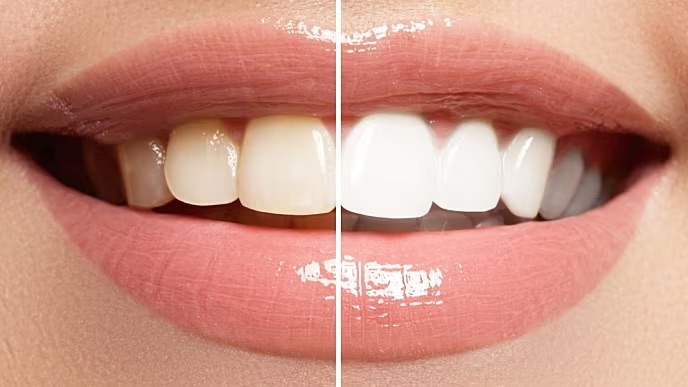
Impressions are taken and trays fabricated to fit your teeth precisely. You whiten at home over a period of days with professional-strength gel.
The custom fit is what distinguishes this from a drugstore kit: the gel stays on the teeth and off the gums. Ill-fitting one-size trays leak, which is the usual reason people find over-the-counter whitening irritating. Trays are also reusable for future touch-ups.
Many patients get the best result from an initial professional application followed by take-home maintenance. Results are assessed as you go and the approach adjusted.
Worth knowing before you start:
You will be told which of these apply to you before treatment rather than after.
Two things should be established before whitening:
Gums should be healthy first. Whitening agents applied to inflamed tissue cause irritation and unnecessary discomfort. If you have gum disease, treating it first makes whitening both more comfortable and more effective — and it addresses a genuine health issue in the process.
Recession changes what is achievable. Where roots are exposed, whitening will not lighten them to match the enamel above. Depending on how visible this is, gum grafting to cover the exposed root may be the more effective way to improve appearance — sometimes considerably more so than whitening.
Similarly, if the concern is that teeth look short or a smile shows a lot of gum, whitening will not address that. Crown lengthening is the procedure that does.
Temporary sensitivity to cold is the most common side effect and it usually resolves within a few days of finishing. It can be managed by:
If you already have sensitive teeth, say so at the outset — the protocol can be adjusted from the start rather than after you have had an uncomfortable few days.
Have crowns or veneers on your front teeth? Mention it before whitening. Restorations do not change colour, so whitening the teeth around them can leave a mismatch that requires replacing the restoration.
Professionally supervised whitening using established agents has a long safety record and does not damage enamel. Temporary sensitivity is common but reverses.
The risks come from unsupervised overuse and from products of unknown composition. Having it supervised means the concentration and duration are appropriate to your teeth and the gum tissue is protected.
Typically one to three years, depending heavily on diet and habits. Coffee, tea, red wine and tobacco cause teeth to re-darken faster.
Because you keep your custom trays, periodic touch-ups are inexpensive and straightforward — usually a night or two rather than a full course.
No. Whitening agents only affect natural tooth structure. Crowns, veneers, bridges and composite fillings keep whatever shade they were made in.
If you have visible restorations on front teeth, whitening the surrounding natural teeth can create a mismatch. In that situation whitening is often done first and the restorations replaced afterward to match the new shade — which is worth planning for rather than discovering.
Mainly because gum health determines whether whitening is comfortable and effective. Inflamed gums make bleaching irritating; recession means exposed roots that will not lighten to match.
Sometimes the assessment concludes that whitening is not the treatment that will actually improve your smile — if the issue is an uneven gumline or exposed roots, a different procedure will do considerably more. That is a more useful answer than simply selling you the whitening.
Reshaping gum and bone to expose more tooth — either to fix a gummy smile or to give your dentist enough tooth to restore.
Learn moreCovering exposed roots and rebuilding a gumline that has receded — including options with no scalpel and no sutures.
Learn moreSpecialist care for the gum and bone that hold your teeth in place — the foundation everything else depends on.
Learn moreDr. Liu will evaluate your situation and explain your options — including the ones you may not have been offered elsewhere.